Guvera · 2015
The Findability of Music
TL;DR
Guvera's users couldn't find music that was already in the app. I analysed 500+ survey responses, ran card sorts, user interviews, and usability tests to diagnose the problem. The solution was twofold: a new thematic browsing system called “channels” (organised by genre, mood, and activity) and a rebuilt search experience with better metadata and relevance. Time to first play was halved, retention improved, and ad conversion increased. The bigger win was helping establish UX as a practice within an organisation that had previously focused solely on visual design.
Information architecture · Card sorting · Prototyping · Tree testing · User interviews · Survey analysis · Usability testing · Wireframing
Certain information has been omitted or obfuscated in this case study. The opinions presented here represent my views alone, not of my current or past employers.
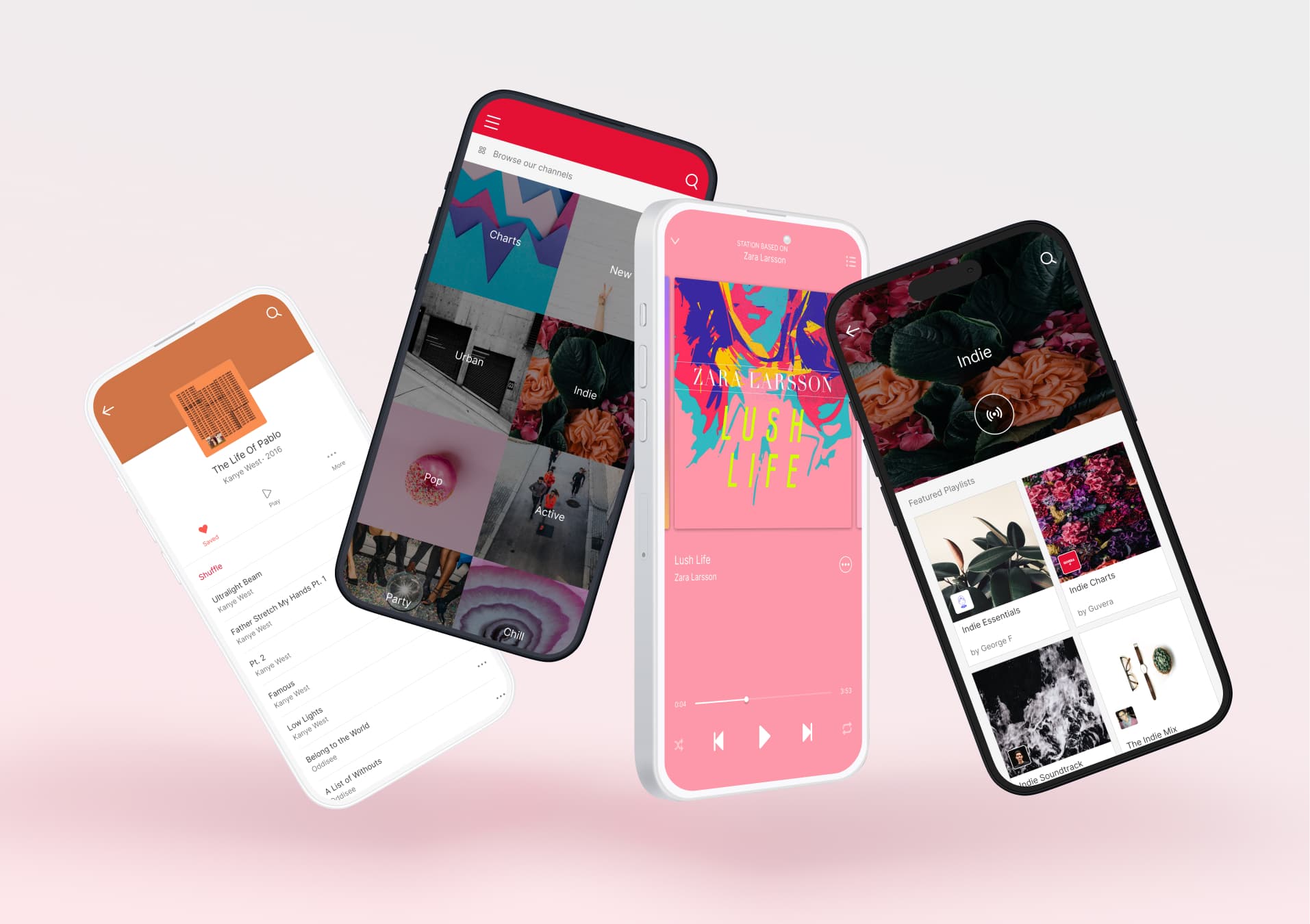
Information architecture is one of the most underrated facets of UX design — when done well, it's invisible. When I joined Guvera, an ad-funded music streaming service, as a Software Development Team Lead, the design function was primarily focused on visual execution. UX as a practice was new to the organisation. After months of surfacing usability issues and proposing fixes, I transitioned into a UX role in 2015 — and improving findability quickly became my primary focus after data pointed clearly to it as the biggest problem users were experiencing.
Discovery
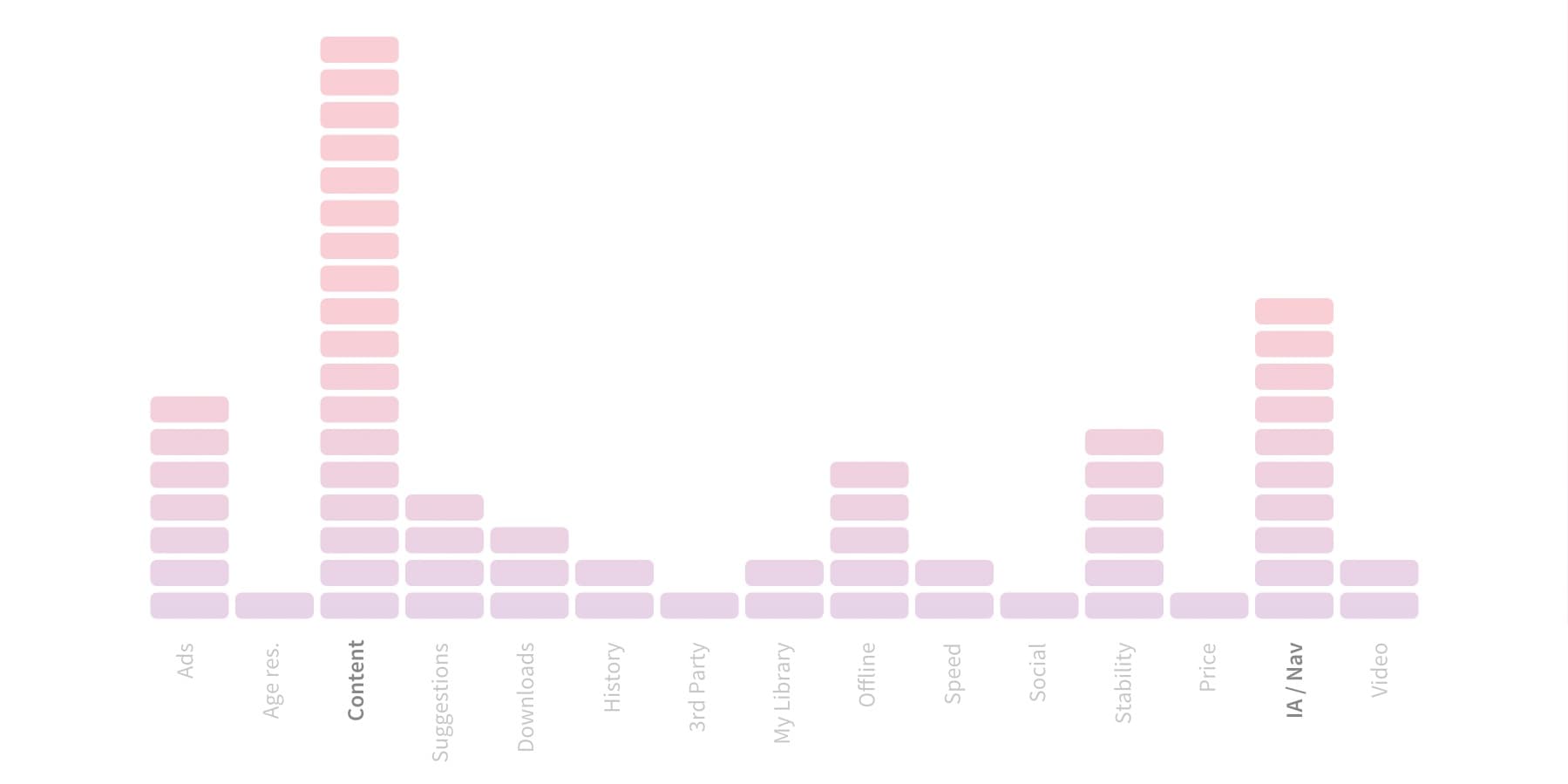
A marketing survey asked users: “If there was one thing you could change about Guvera, what would it be?” I extracted ~430 complaints from 500+ responses and grouped them into 15 areas of concern. Content availability was the top issue, but IA and navigation problems were a clear second — users couldn't find content that already existed in the app. That finding directed my focus.
To go deeper, I ran a cognitive walkthrough and remote usability tests to uncover specific friction points, then interviewed music listeners to understand their behaviours. Key insights: people choose music based on mood, activity, and genre — not by content type (artist, album, track). They also have more trouble recalling albums than artists or songs.
Ideation
Based on the findings, I focused on two areas: the Organisation System and the Search System.
Organisation System
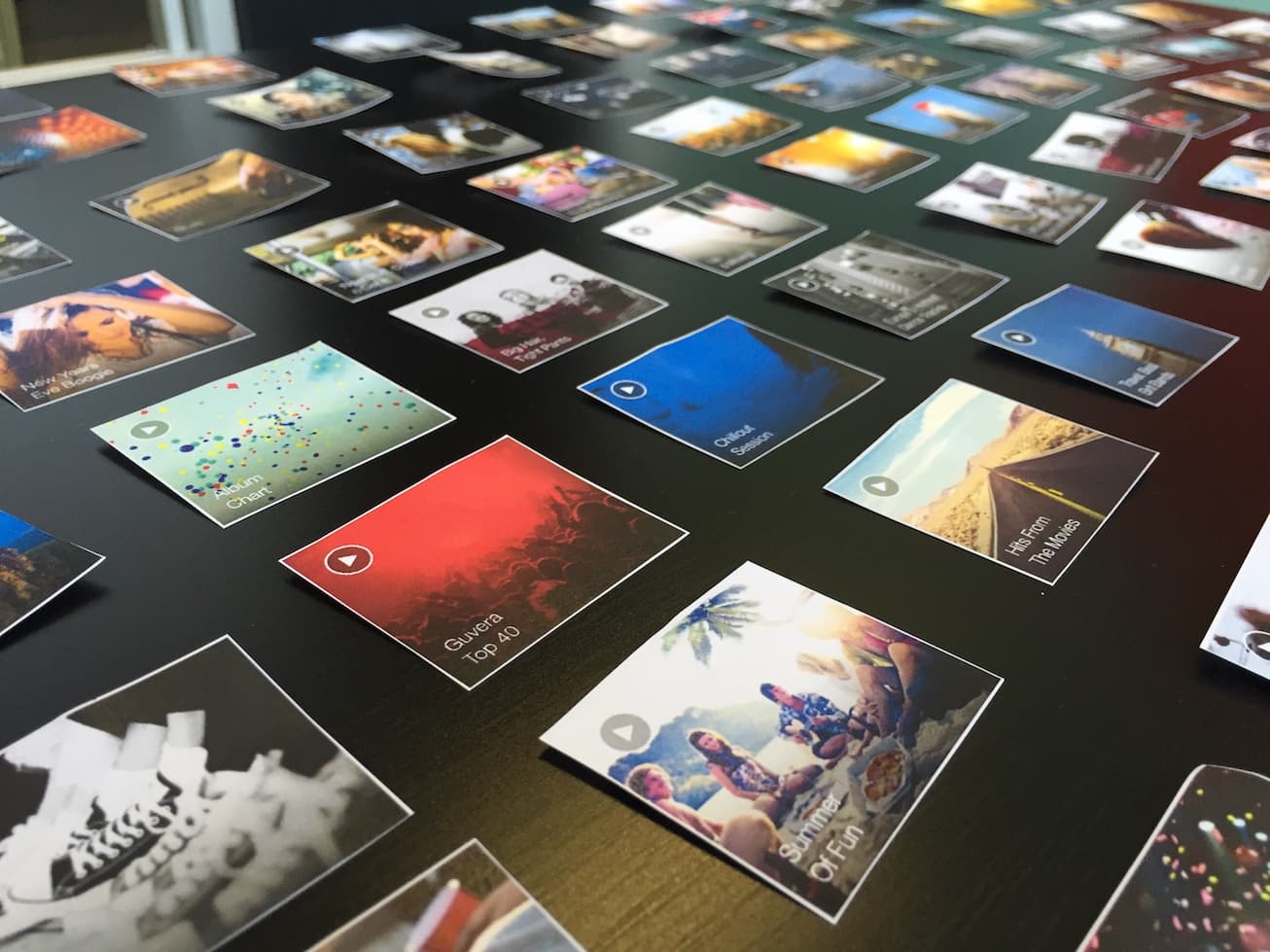
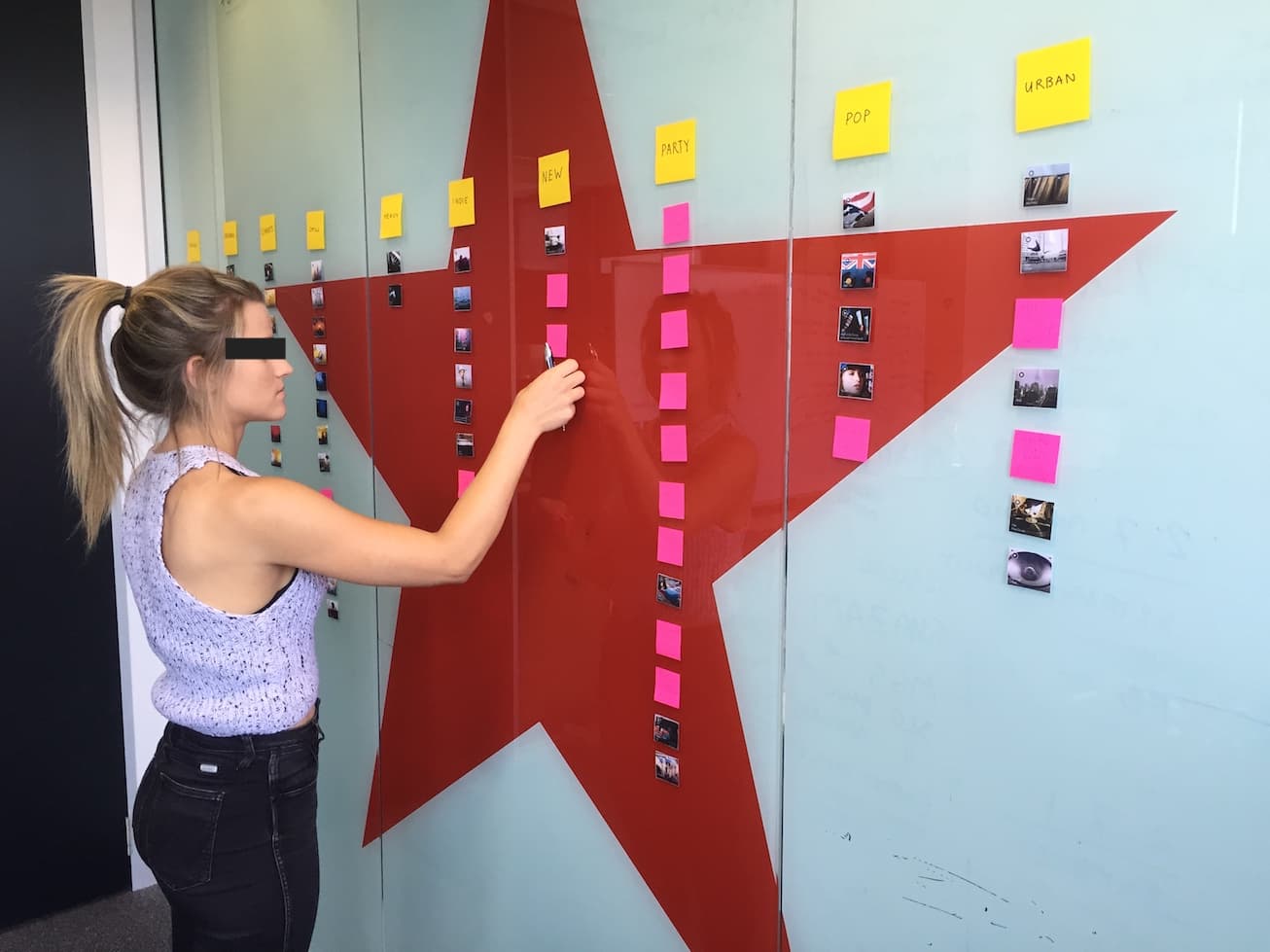
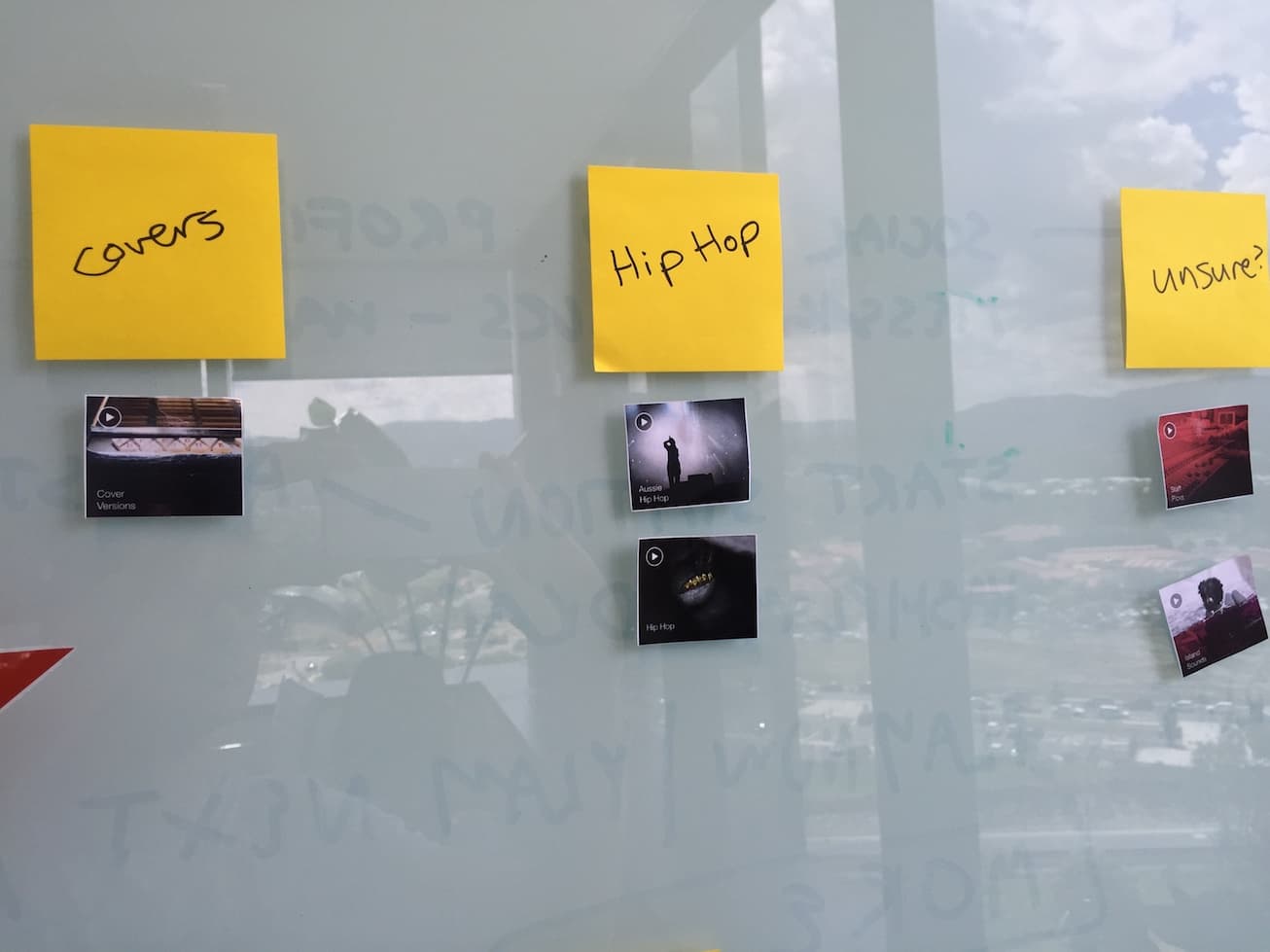
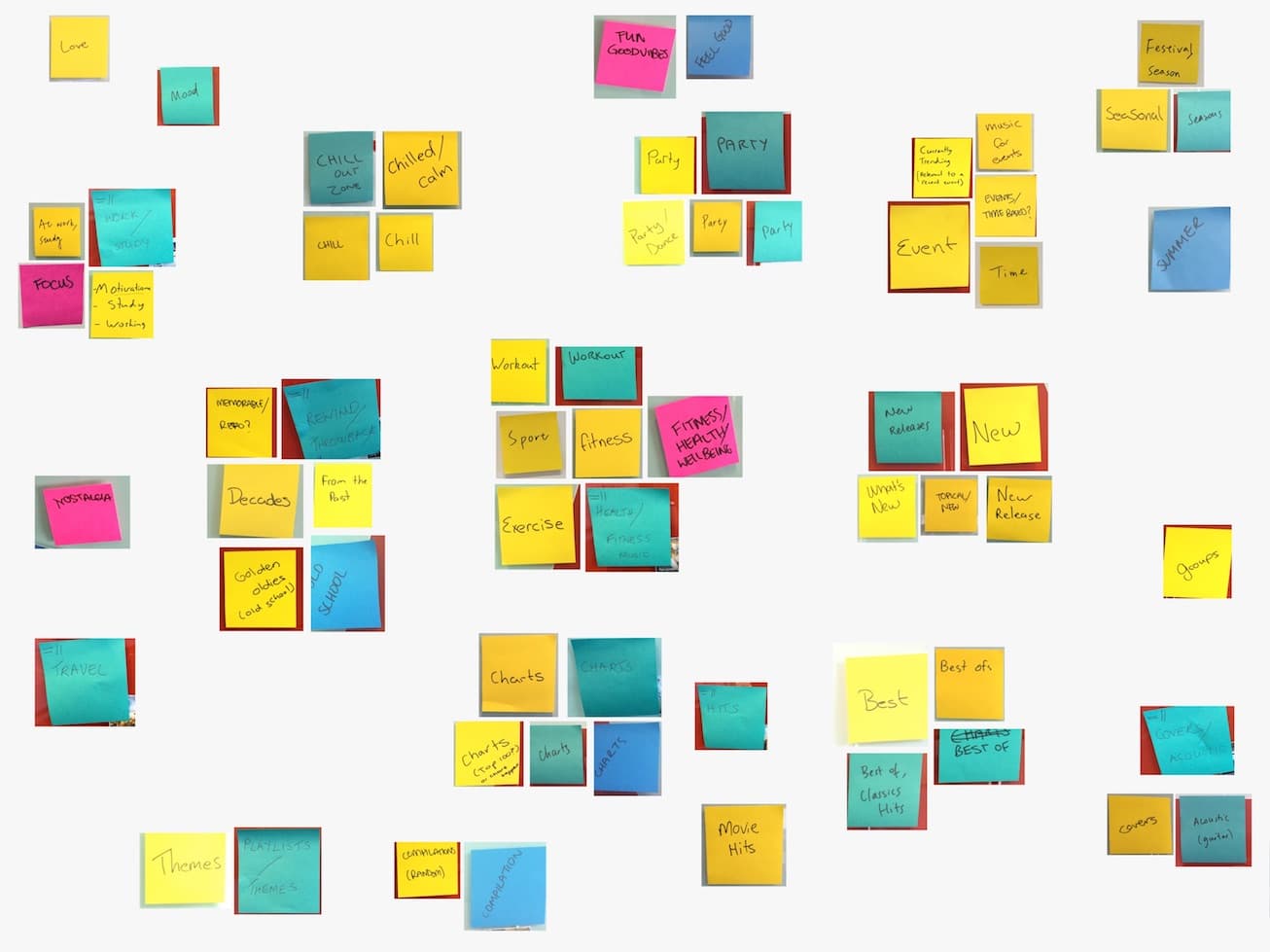
Guvera's browse structure was built around content types (artists, albums, tracks, playlists) — a mismatch with how people actually think about music. To explore a more natural taxonomy, I ran an open card sort with 80 playlist cards and 12 internal participants.
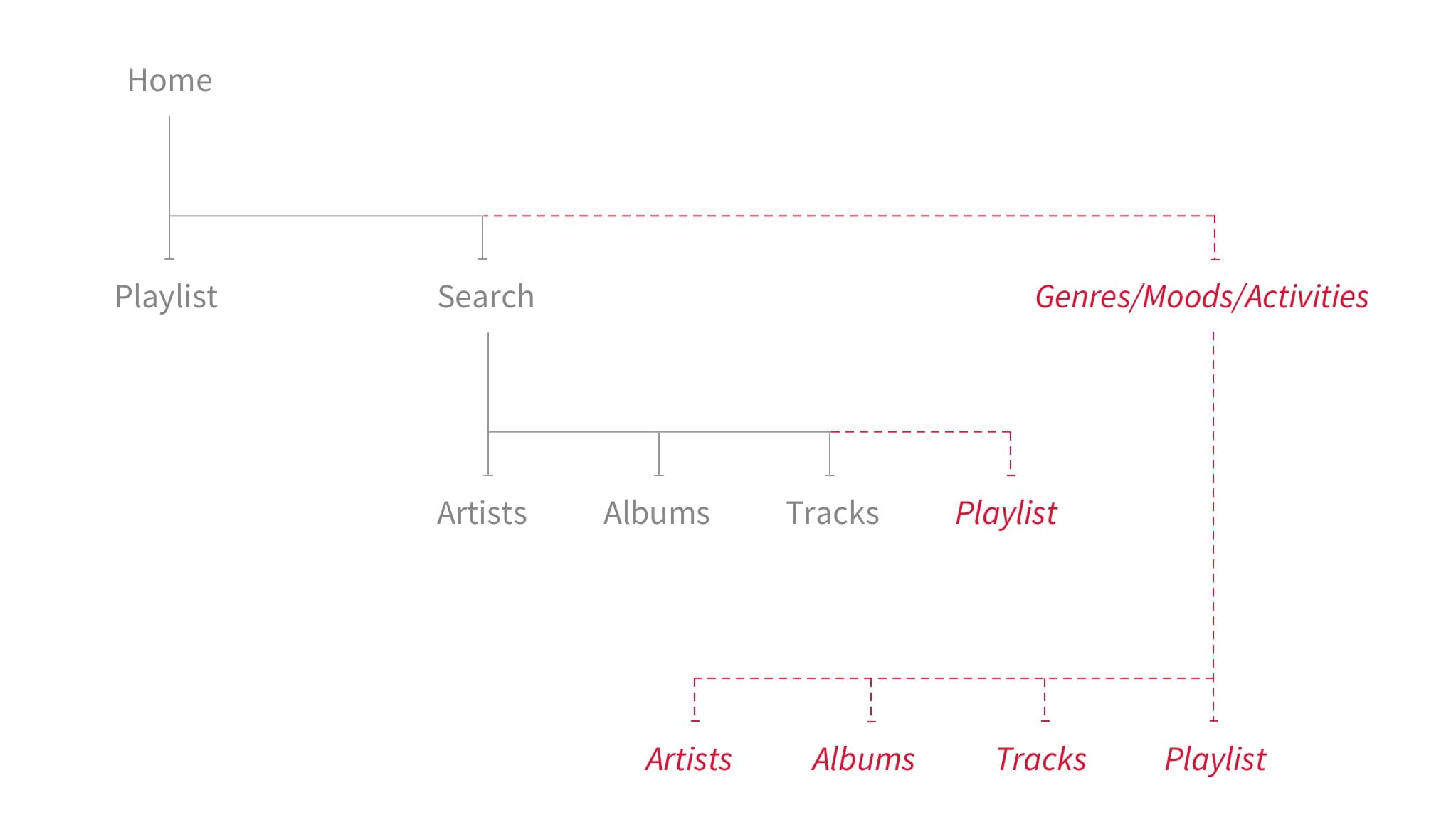
The results confirmed that users naturally group music by genre, activity (working out, studying, parties), and mood. This led us to introduce “channels” — thematic groupings that could house any mix of playlists, artists, and tracks under a unifying theme. The idea initially met resistance; moods and activities as categories required more convincing than genres alone. Having research to point to made the difference. A bonus we discovered later: channels made it easy to serve contextually relevant ads — a gym ad in the workout channel, university ads in the study channel.
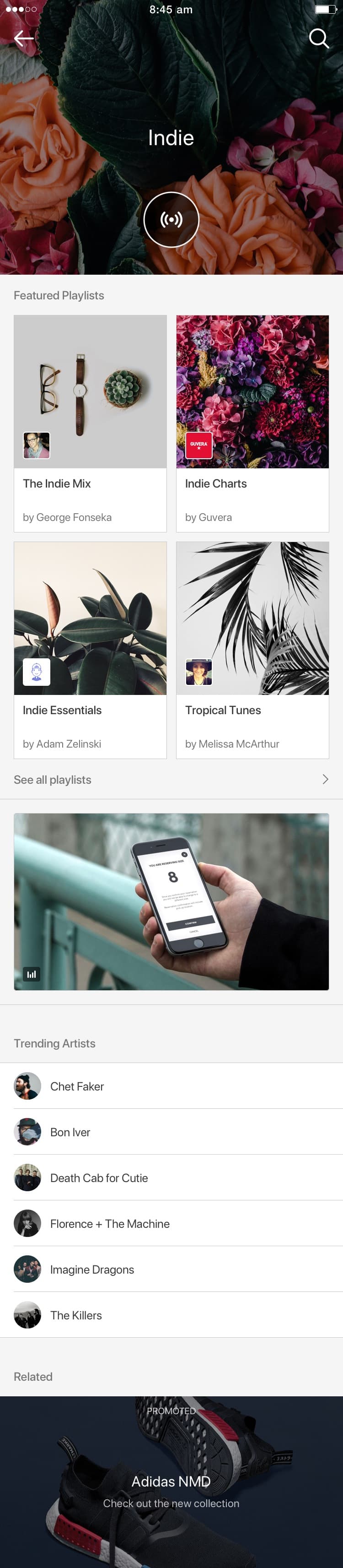
The following are high-fidelity mocks of the channels on the home page and an individual channel page.

Search System
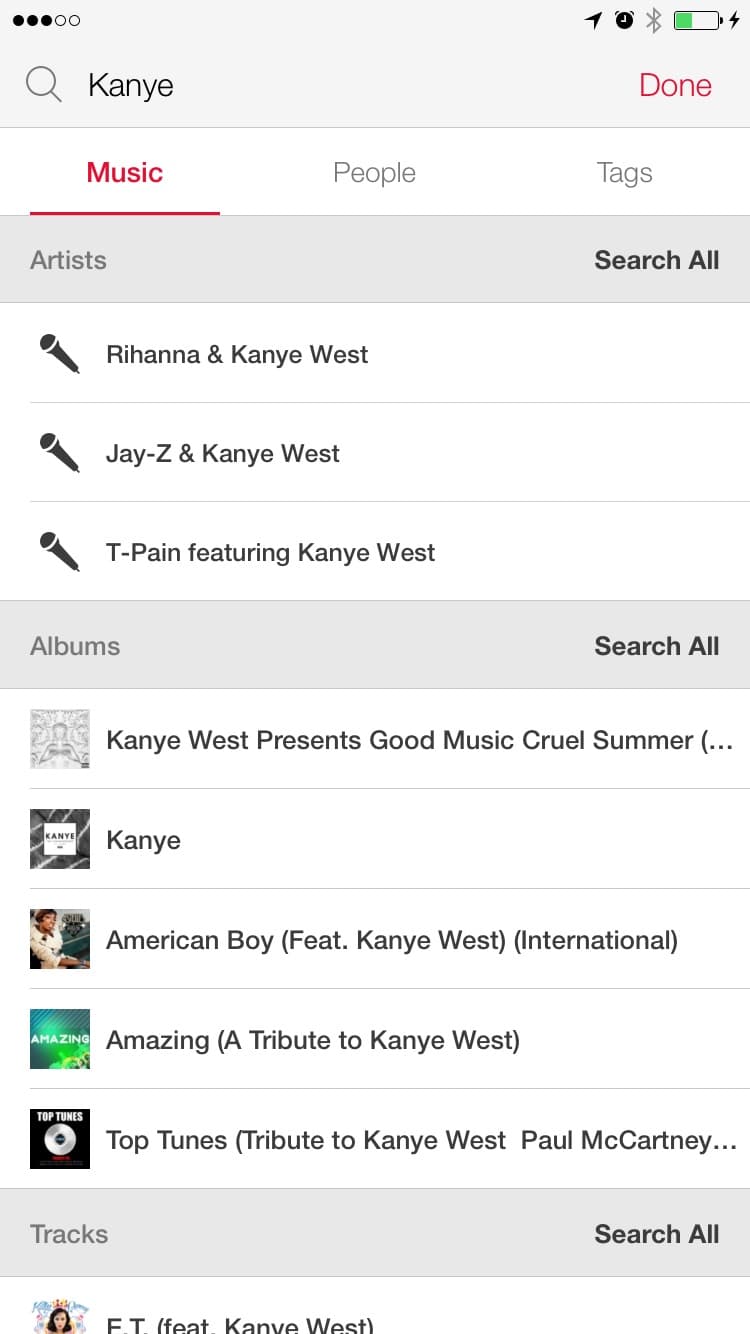
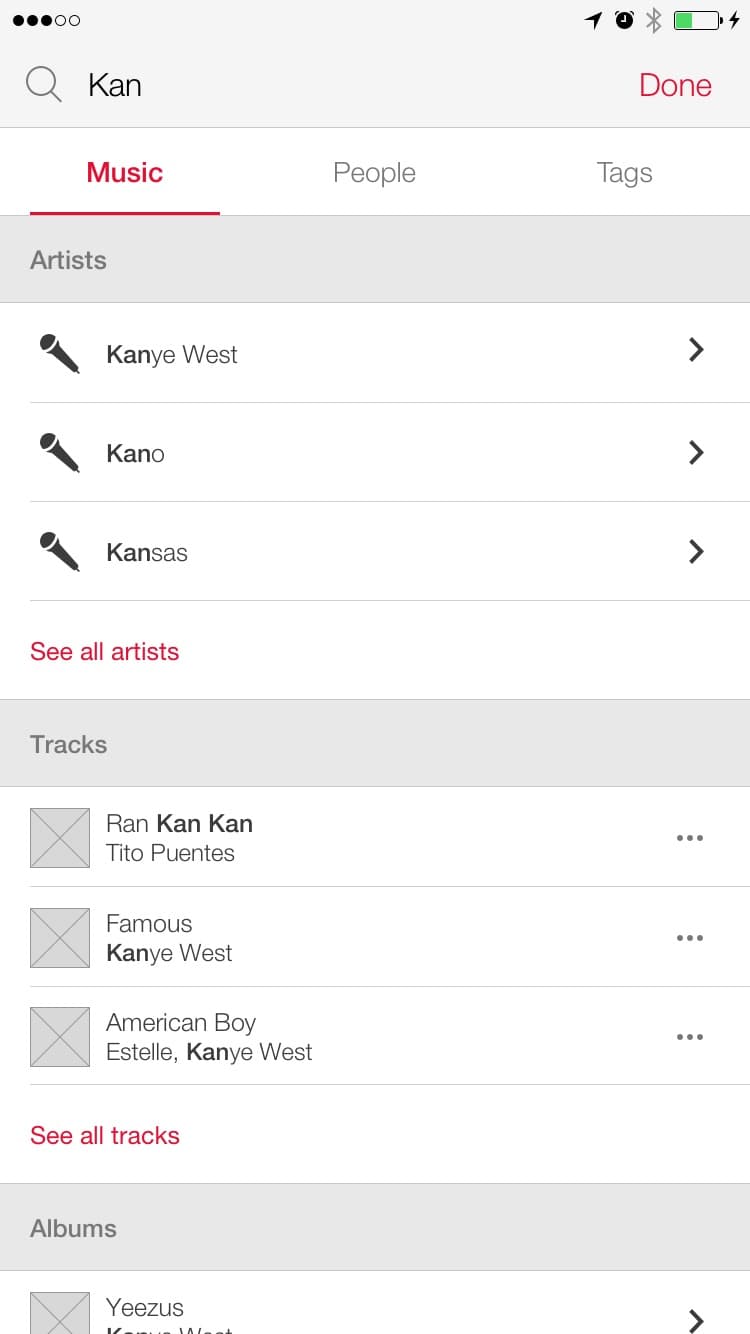
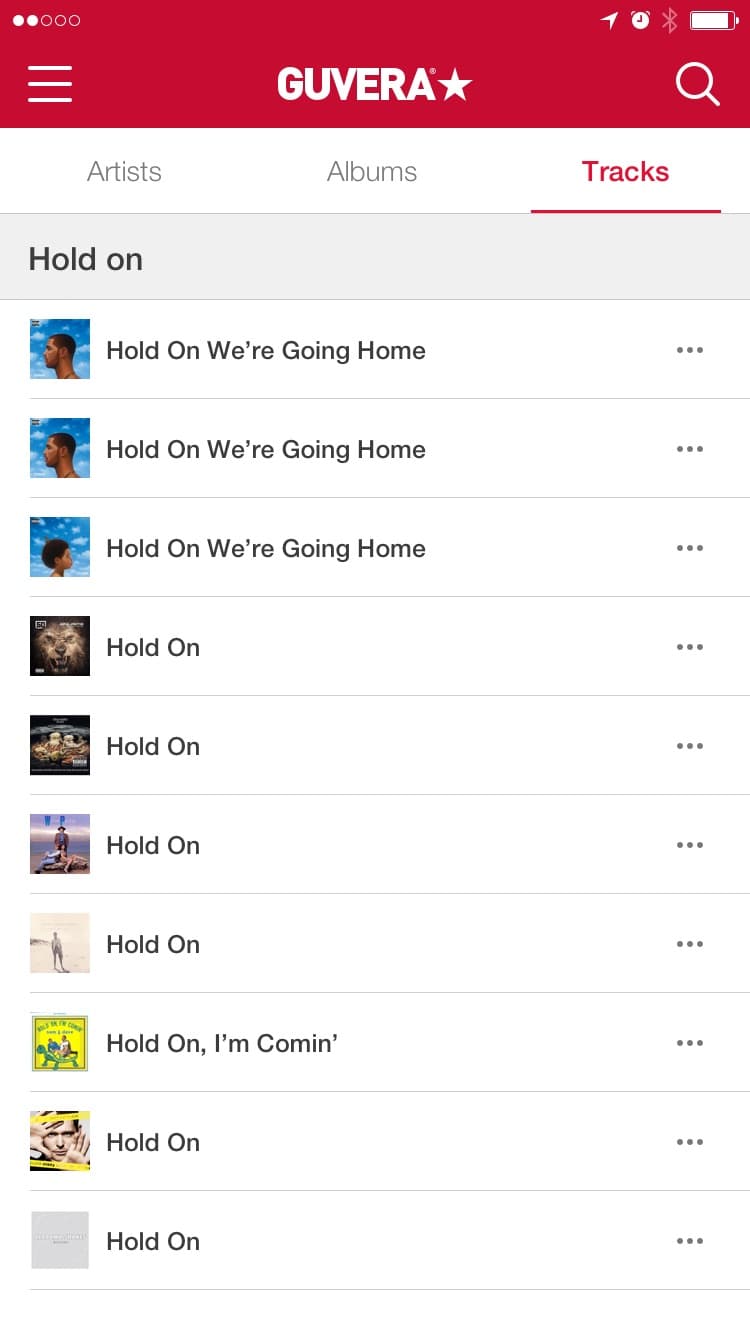
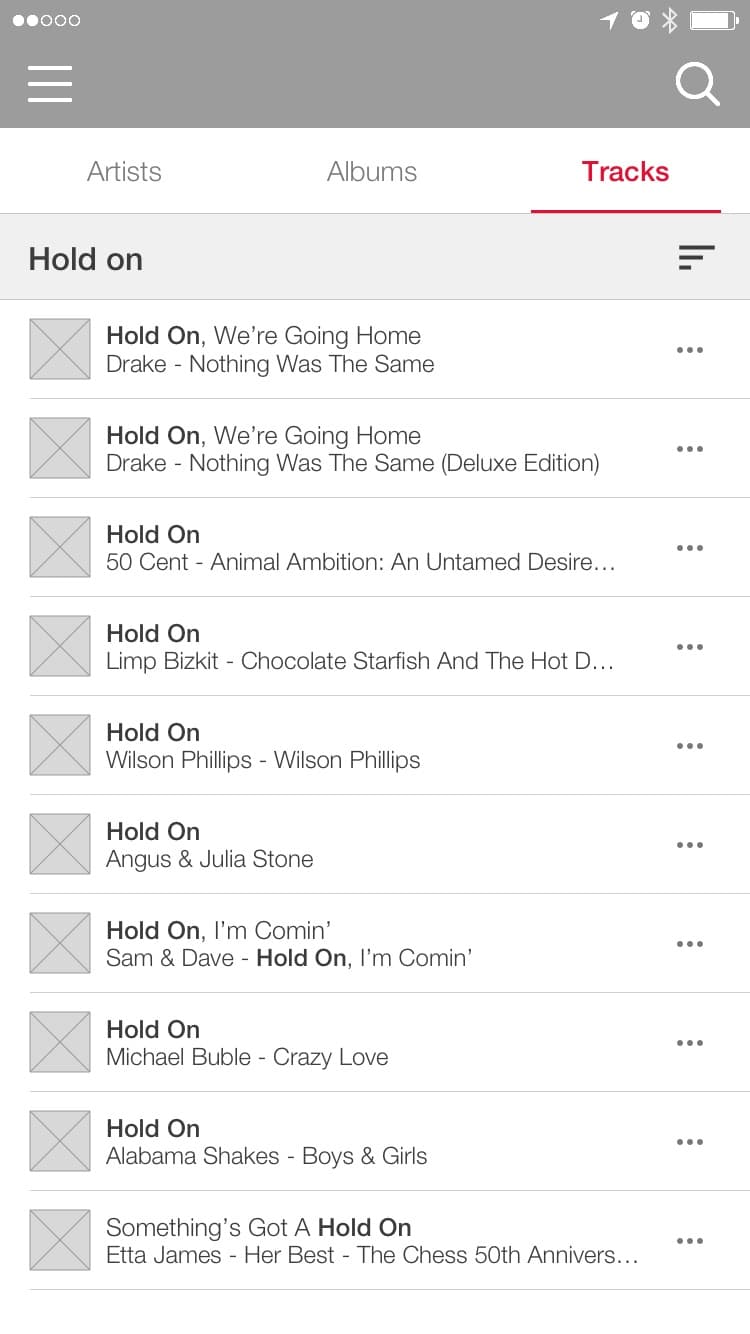
The existing search had several significant problems. Missing metadata made results hard to parse — tracks appeared without artist names, albums without context. Results were plagued with duplicates from ingestion errors, sections were ordered in ways that didn't match user behaviour, and the search algorithm surfaced irrelevant results.
Initial search screen — before and after:
Track search results — before and after:
Album search results — before and after:
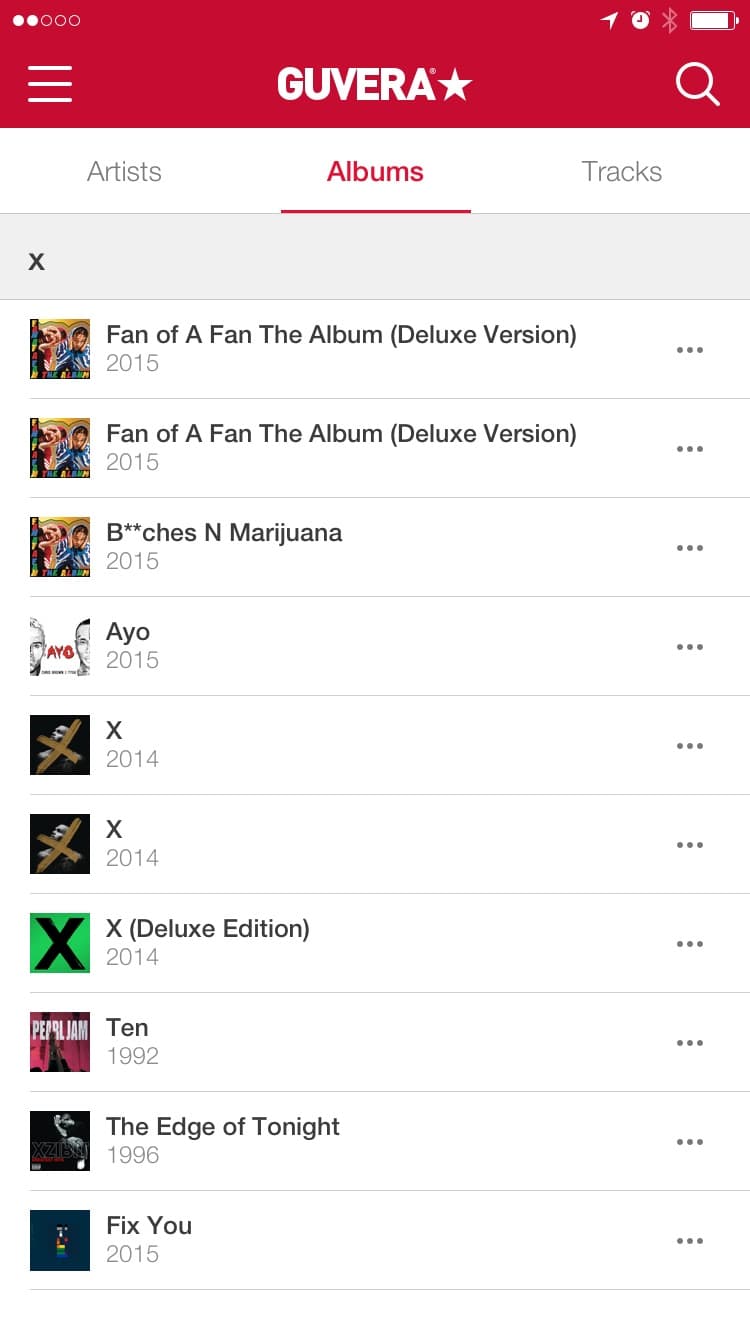
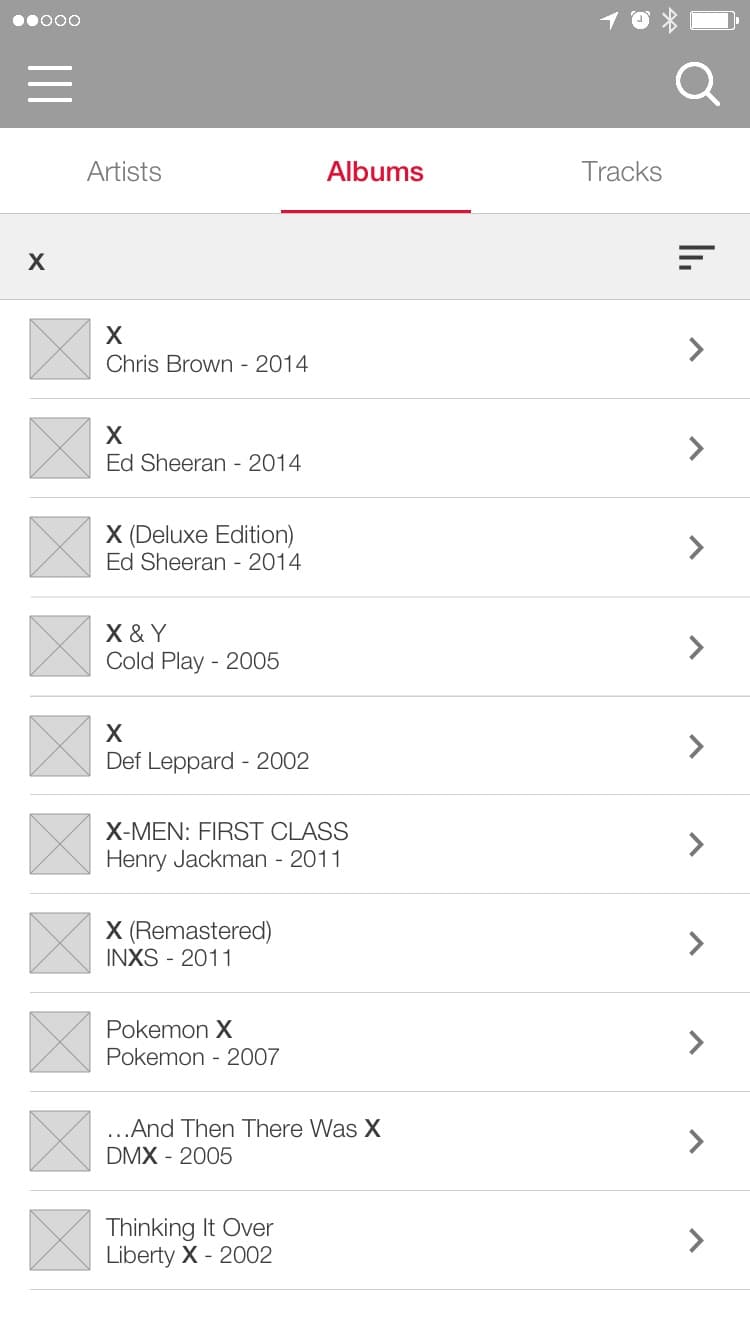
Solutions included reordering sections by search popularity (artist → track → album), adding artist and album metadata to all results, fixing ingestion to remove duplicates, highlighting matched strings, and tweaking the algorithm to weight string position in results.
Validation
Simple design decisions — category names, button placement — were tested iteratively throughout the process. For more complex integrations like channels and the search algorithm, I validated post-release using tree testing and remote usability testing with ten participants.
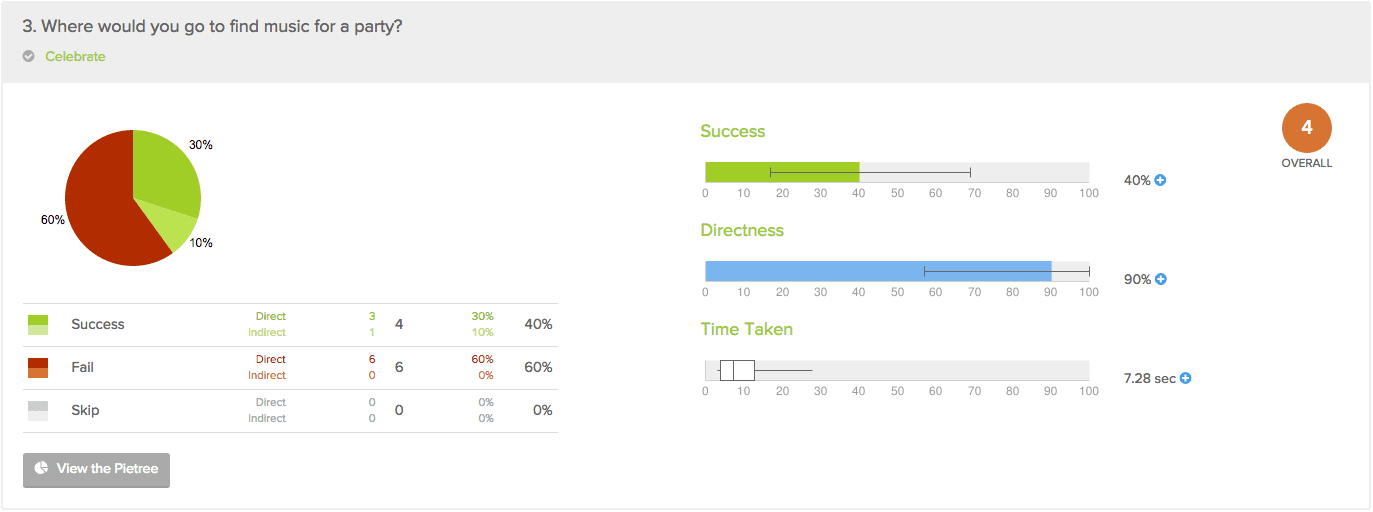
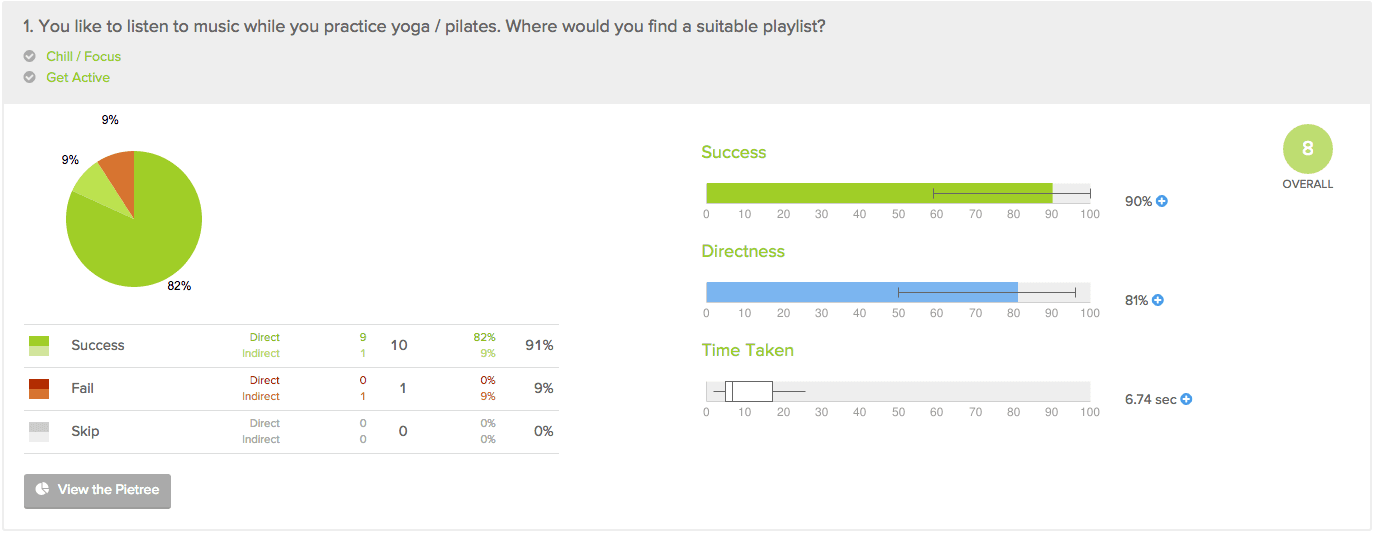
Tree testing confirmed the revised channel names were findable across a range of music-seeking tasks. Usability testing showed the new search produced fewer errors. Channels were well-received once users explored them, though the concept needed a moment to click for some participants.
Outcome
The impact of the redesign showed up in the numbers — time to first play for new users was halved, retention improved, and ad conversion increased — but the more meaningful shift was harder to quantify. Users who had previously bounced out of frustration were now finding their way to music they actually wanted to hear, which was the whole point.
What this project reinforced for me was how much of UX work is really about translation — bridging the gap between how a system is organised and how people naturally think. The existing structure wasn't wrong on its own terms, it just didn't reflect how users experienced music. Once we aligned the two, everything downstream got easier: browsing felt intuitive, search results made sense, and the app stopped getting in its own way.
Perhaps the most lasting outcome wasn't the product changes themselves, but the cultural shift they catalysed. Guvera had a strong visual design function, but UX thinking was new to the organisation. Getting cross-functional buy-in for the channels concept — which initially met resistance — demonstrated that research-backed decisions carry weight. It helped establish UX as a credible voice in how the product was built, and set the foundation for the work that followed.